
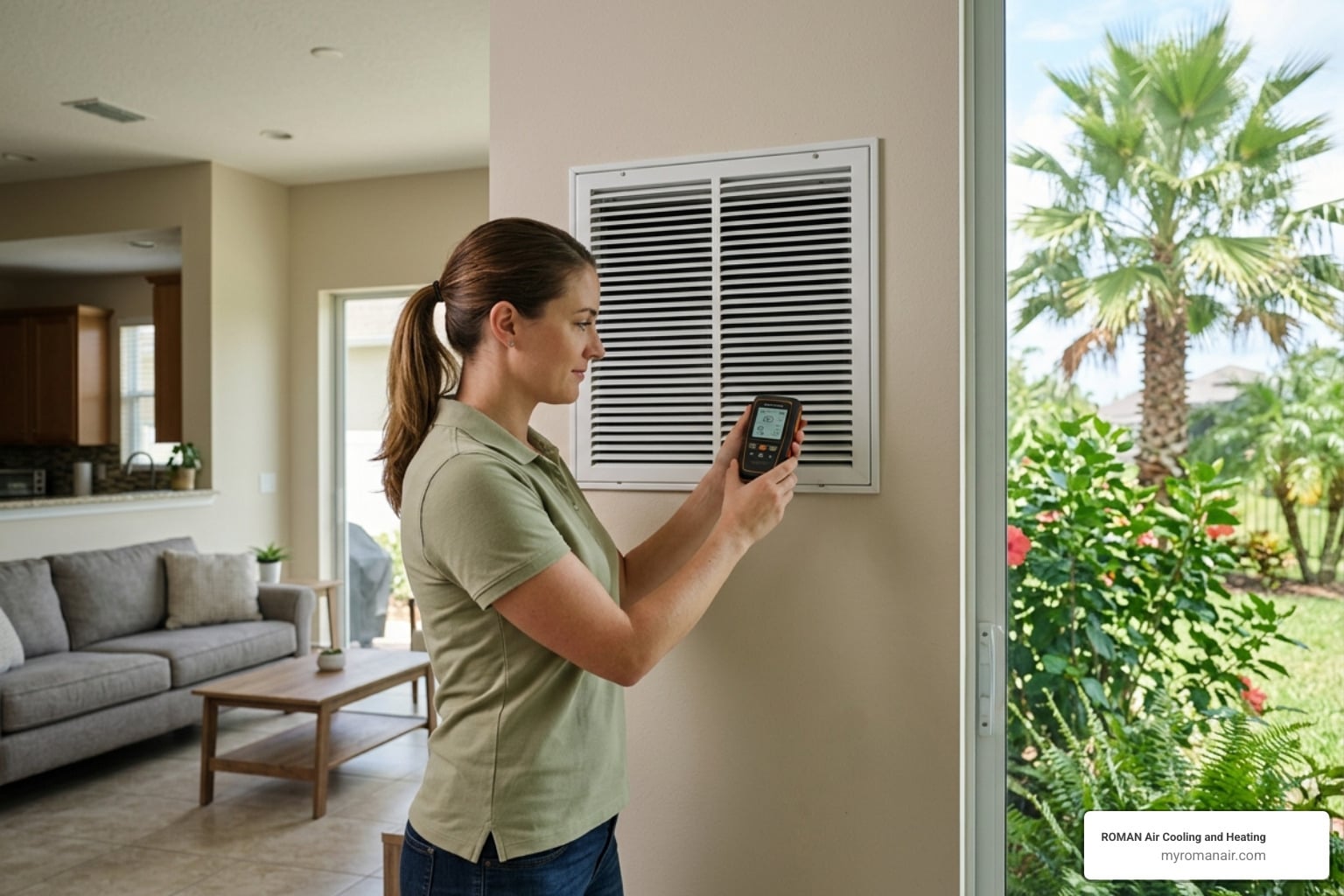
Why Testing Air Quality in a Home Matters More Than You Think
Testing air quality in a home is something every homeowner should do — especially here in Central Florida, where sealed, air-conditioned spaces can trap pollutants year-round.
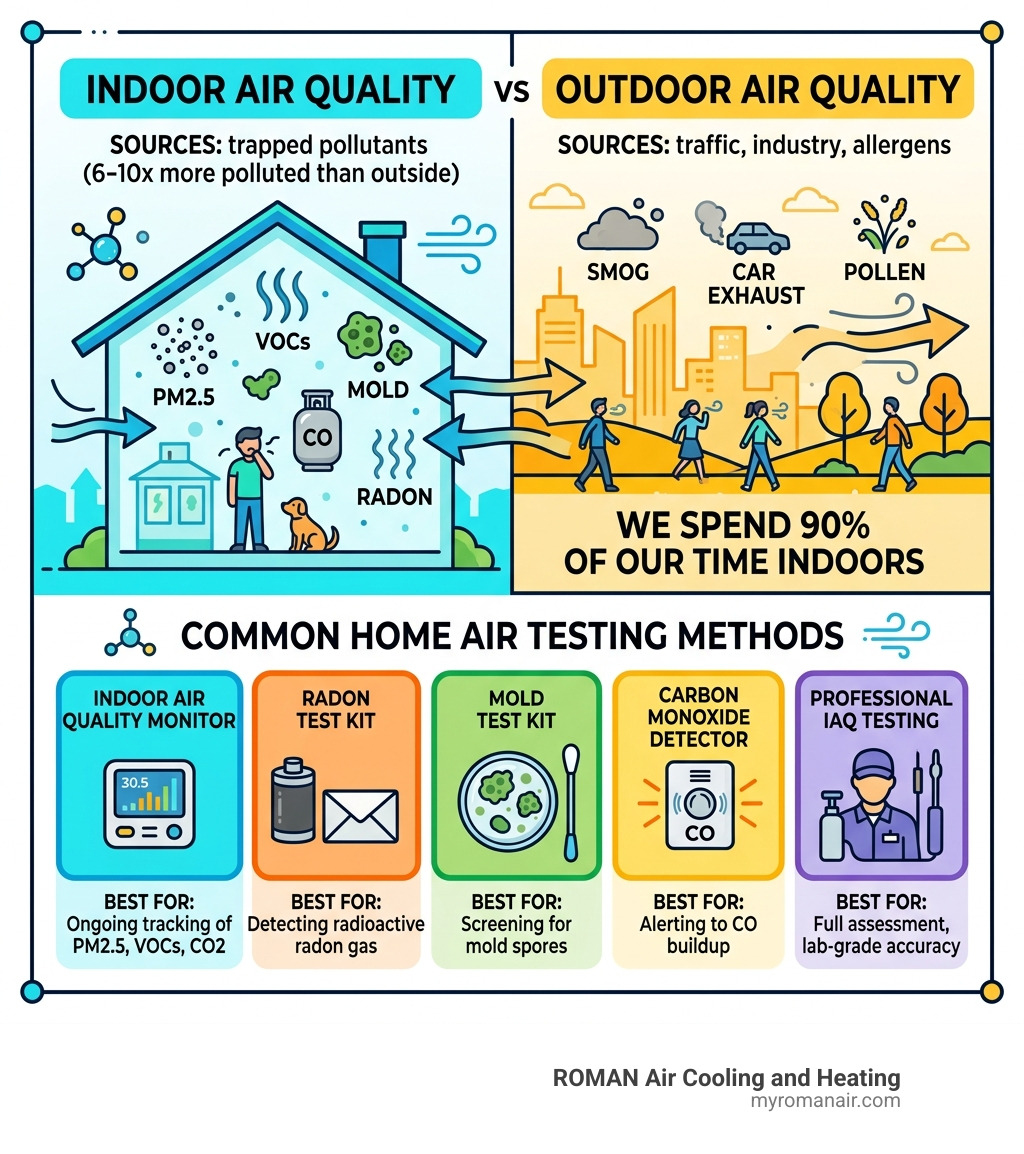
Here’s a quick overview of the most common ways to test your indoor air:
| Method | Best For | Cost Range |
|---|---|---|
| Indoor air quality monitor | Ongoing tracking of PM2.5, VOCs, CO2 | $50–$300+ |
| Radon test kit | Detecting radioactive radon gas | $15–$80 |
| Mold test kit | Screening for mold spores | $11–$50 |
| Carbon monoxide detector | Alerting to CO buildup | $20–$100 |
| Professional IAQ testing | Full assessment, lab-grade accuracy | $200–$500+ |
Most homeowners do not think much about the air inside their home, but the EPA and Health Canada both note that indoor air can be 6 to 10 times more polluted than outdoor air. Since most of us spend about 90% of our time indoors, that matters. A built-in air purification system can help reduce airborne pollutants, improve daily comfort, and even add long-term value to your home.
The sources are often invisible: radon seeping through your foundation, carbon monoxide from a poorly maintained furnace, VOCs off-gassing from new furniture or paint, or mold spores growing in a damp Florida bathroom. You can’t see them. You can’t smell most of them. But they can quietly affect how you feel every single day.
If you’ve been dealing with unexplained headaches, a chronic stuffy nose, or fatigue that seems to lift the moment you leave the house — your indoor air quality may be the culprit.
I’m Yanelis Roman, a Registered Dietitian Nutritionist and owner of Roman Air Cooling and Heating, serving Central Florida homeowners — and testing air quality in a home is something I help families navigate through both a health and HVAC lens. Understanding how the air in your home affects your body is exactly what the next sections of this guide are built around.
Understanding Indoor Air Quality and Common Pollutants
Indoor Air Quality (IAQ) refers to the air quality within and around buildings and structures, especially as it relates to the health and comfort of building occupants. While we often worry about smog or exhaust fumes outside, the air inside your living room in Saint Cloud or your bedroom in Lake Nona can actually be a cocktail of trapped particles and gases.
According to the Florida Department of Health, poor IAQ is linked to both short-term effects like eye irritation and long-term risks like respiratory disease. There is a profound link between air quality and well-being; when the air is clean, your body doesn’t have to work as hard to filter out toxins, leading to better sleep and higher energy levels.
Common Indoor Air Pollutants
To understand why testing air quality in a home is necessary, we have to look at the “usual suspects” found in Florida households:
| Pollutant | Common Sources | Potential Health Impact |
|---|---|---|
| Radon | Soil under the home, building materials | Lung cancer (second leading cause after smoking) |
| Carbon Monoxide (CO) | Gas appliances, blocked chimneys, idling cars | Headaches, dizziness, death (the “silent killer”) |
| VOCs | Paints, cleaning supplies, new carpets | Liver/kidney damage, “brain fog,” irritation |
| Mold Spores | High humidity, AC leaks, damp bathrooms | Asthma flare-ups, allergic reactions, coughing |
| Particulate Matter | Cooking, dust, pet dander, outdoor smoke | Heart and lung issues, chronic bronchitis |
In places like Kissimmee and Orlando, our high humidity is a major driver for biological pollutants. When moisture levels aren’t controlled, your home becomes a breeding ground for dust mites and mold, making IAQ a top priority for local families.
Signs You Need to Start Testing Air Quality in a Home
How do you know if your air is “bad” if you can’t see it? Your home and your body often give you clues. One of the most obvious physical signs is condensation on window panes. If you see water beads on the inside of your windows in the morning, your humidity is likely too high, which is a giant “Welcome” sign for mold growth.
Another major red flag is what experts call “Sick Building Syndrome.” This is when residents experience symptoms like nausea, burning eyes, or lethargy that seem to disappear shortly after they leave the house. If you feel great at work in Orlando but start sneezing the moment you get home to Celebration, it’s time for testing air quality in a home.
Common indicators include:
- Persistent Odors: Musty smells that don’t go away after cleaning.
- Dust Buildup: Surfaces getting dusty again just days after a deep clean.
- Health Spikes: Frequent headaches, skin rashes, or worsening asthma.
- Visible Growth: Black or green spots around AC vents or under sinks.
If you are noticing these trends, you should take steps to improve your air quality immediately. Many homeowners find that testing their air quality provides the peace of mind needed to identify exactly what is floating in their living space.
When is the Best Time for Testing Air Quality in a Home?
While you can test anytime, certain milestones make it essential. If you are moving into a new home in Davenport or Poinciana, you want to ensure the previous owners didn’t leave behind a hidden mold or radon problem.
Renovations are another critical time. Sanding old paint, installing new cabinets (which often release formaldehyde), and tearing up old carpet can send a massive spike of VOCs and particulates into your breathing zone. We also recommend testing during seasonal transitions. In Florida, when we switch from “windows open” weather (which is rare!) to “AC on 24/7” mode, pollutants can become trapped. Keeping your air clean in Florida homes requires a proactive approach to these transitions.
Health Risks of Specific Indoor Pollutants
It is important to understand the gravity of what we are testing for.
- Radon: This naturally occurring gas is responsible for an estimated 14,000 to 30,000 deaths per year in the U.S. Because it is odorless and colorless, testing is the only way to find it.
- VOCs (Volatile Organic Compounds): These are emitted as gases from certain solids or liquids. Research shows that 75% of U.S. households used at least one pesticide product indoors in the past year, contributing to high VOC levels.
- Asbestos and Lead: In older homes in historic parts of Central Florida, these materials can become airborne during DIY projects, leading to severe lung damage or neurological issues.
- Carbon Monoxide: This gas interferes with the blood’s ability to carry oxygen. Even low-level exposure can cause chronic fatigue and confusion.
For a deeper dive into these risks, the 2025 Home Air Testing Guide provides an excellent breakdown of how DIY kits compare to professional-grade sensors.
Methods for Testing Air Quality in a Home: DIY vs. Professional
When it comes to testing air quality in a home, you have two main paths: doing it yourself with consumer-grade tools or hiring a professional team like us.
DIY Kits and Smart Monitors
For basic, ongoing awareness, DIY options are a great starting point.
- Smart Monitors: Devices like Airthings or Temtop provide real-time data on PM2.5, humidity, and CO2. These are excellent for spotting patterns, such as a spike in pollutants while you’re cooking dinner.
- Radon Kits: These usually involve a small canister you leave in your lowest living level for 2–7 days and then mail to a lab.
- Mold Swabs: These allow you to test a specific visible spot to see if it’s active mold.
However, keep in mind that low-cost air monitors have limitations. They might not be calibrated perfectly, and they can’t tell you why a level is high—only that it is. If you’re looking for an easy and cheap way to start, these are your best bet, but they shouldn’t replace professional intervention if you have chronic health symptoms.
The Professional Process for Testing Air Quality in a Home
Professional testing is more like a doctor’s visit for your house. At Roman Air Cooling and Heating, we don’t just look at a screen; we perform a comprehensive Indoor Air Quality assessment.
Our process typically involves:
- Visual Inspection: We look for the source. Is there a leak in your ductwork? Is your AC coil covered in organic growth?
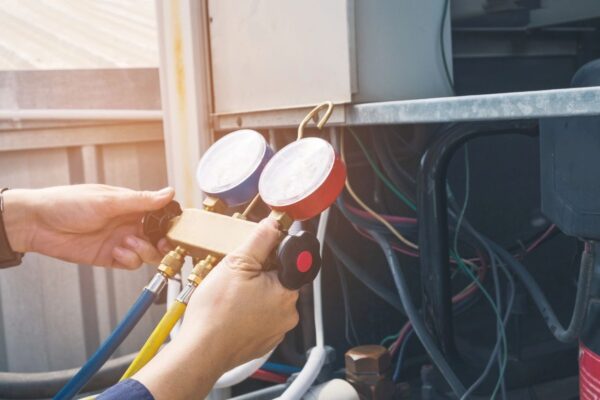
- Advanced Instrumentation: We use calibrated, handheld monitors that measure specific toxins down to parts per billion.
- Lab Analysis: For mold and certain chemicals, we take air samples and send them to a certified lab for exact identification of spore types.
- Itemized Action Plan: Instead of just giving you a “pass/fail” grade, we provide a roadmap. This might include duct sealing, installing a UV light, or upgrading your filtration system.
Detecting Mold and Hidden Contaminants
Mold is the “boogeyman” of Florida real estate. Because our homes are built on shifting soil and limestone, slab leaks are common, which can lead to hidden mold under floorboards. Professional testing air quality in a home includes moisture mapping—using thermal cameras to find damp spots inside walls before the mold even becomes visible to the naked eye.
How to Improve Your Air Quality After Testing
Once you have your results, it’s time for action. We believe in a three-pronged approach: Source Control, Ventilation, and Purification.
1. Source Control
The most effective way to improve air is to remove the problem. This means fixing the leak that’s causing mold or switching to natural cleaning products that don’t off-gas VOCs. One often overlooked source of pollution is dirty ductwork. Clean ducts mean better air, as they prevent the “re-circulation” of dust and dander every time your AC kicks on.
2. Ventilation
Florida homes are built “tight” to save on energy, but this traps pollutants. We can help you install mechanical ventilation systems that bring in fresh, filtered air from the outside without losing your cool indoor temperature.
3. Air Purification and Humidity Control
This is where technology shines.
- HEPA Filtration: Upgrading your HVAC filter can trap 99% of particles.
- UV Air Purifiers: These enhance home health by killing bacteria and mold spores as they pass through your HVAC system.
- Dehumidifiers: Keeping your humidity between 30-50% is the single best thing you can do to stop mold in its tracks. In some cases, using a humidifier during dry months is necessary to prevent respiratory irritation, but in Central Florida, we are usually fighting the opposite battle!
Frequently Asked Questions about Home Air Testing
Does air quality testing detect mold?
Yes, but with a caveat. A general air quality monitor might show a spike in “particulates,” but it won’t tell you if those particles are dust or mold. Professional testing uses air pumps to capture spores on a “spore trap” slide, which is then analyzed under a microscope. This identifies the type of mold and the concentration, comparing your indoor air to the outdoor air to see if you have an active growth problem.
How much does professional air quality testing cost?
Professional testing typically ranges from $200 to $500. The price varies based on the size of your home and whether you need specialized lab work for things like asbestos or specific mold species. While it’s an investment, it’s far cheaper than the medical bills or remediation costs associated with letting a problem go undetected.
Can air purifiers fix poor air quality?
Air purifiers are powerful tools against indoor pollutants, but they aren’t a “magic wand.” They are excellent at removing particles (like smoke and pollen) and some VOCs, but they cannot remove radon or provide the fresh oxygen that proper ventilation does. We always recommend using purifiers as a supplement to source control and HVAC maintenance.
Conclusion: Take a Deep Breath with ROMAN Air Cooling and Heating
You shouldn’t have to guess if the air your family breathes is safe. Whether you are in Hunters Creek, Harmony, or Poinciana, testing air quality in a home is the first step toward a healthier, more comfortable life.
At Roman Air Cooling and Heating, we bring a unique perspective to IAQ. As a veteran-owned business with a 5.0-star rating from over 300 neighbors, we combine technical HVAC expertise with a deep understanding of how environmental factors impact your health. We’re available 24/7 for emergencies, but we’d much rather help you prevent one by ensuring your home’s air is as clean as it can be.
Ready to stop wondering and start knowing? Schedule your professional indoor air quality service with us today. We serve the entire Central Florida area, including Lake Nona, Celebration, and Saint Cloud. Let us help you breathe a little easier!